From Improvising to Controlling, When Speed Stops Being an Advantage
Some time ago I had to observe an organization where maturity was not measured by how much they delivered, but by how much they could sustain without starting to break trust. And that is where the difference becomes clear between an operation that runs fast and one that, even without making much noise, can actually deliver when the demands increase. Over time you realize that sustaining decisions and promises weighs more than getting out fast at the beginning.
At first, improvising seems like a virtue. Moving quickly, solving things on the fly, and adapting the product to each customer creates a pretty convincing sense of agility. When sales depend on learning early, that dynamic even helps. The problem is that the hidden cost is not yet visible, and that is why many people believe everything is going well.
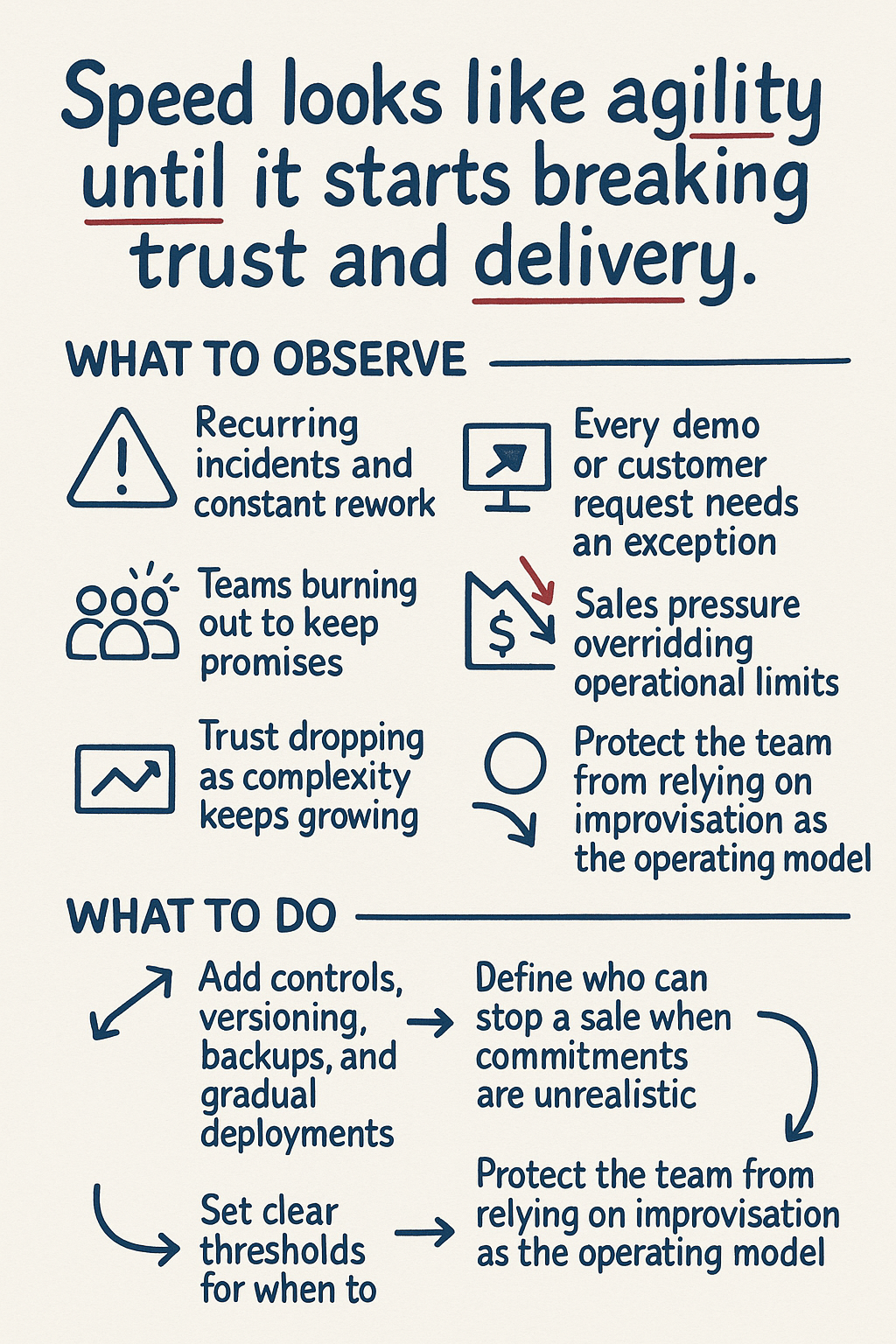
That cost eventually shows up in the form of repeated incidents, rework, team burnout, and loss of commercial trust. What was initially interpreted as flexibility ended up becoming operational debt. And from there the conversation changes, because it no longer matters only whether the product can be sold, but whether the organization can deliver without wearing itself down along the way.
Many teams underestimate that leap. Adding controls, versioning, backups, gradual deployments, or limits on customization is not a minor technical adjustment, even if it is sometimes sold that way. It also forces a change in internal culture, and that is where the discomfort begins. The company stops living off momentum and starts being guided by criteria, which affects how decisions are made, who can stop a sale, and what level of promise is considered reasonable.
Promise first and adapt later may seem like a logical way out for a while. The problem is that when every demo requires an exception, every new customer adds complexity, and every update forces firefighting, that supposed agility shows its seams pretty quickly. The market usually does not reward speed that cannot be repeated.
Formalization also moves pieces within the team. Some people experience those controls as a loss of autonomy, especially if they came from a context where improvisation was the norm. From the technology leadership side, a very clear responsibility emerges: protecting the company from its own inertia. A CTO is not there only to accelerate. They also have to decide when speed is already damaging future capability.
The transition requires redesigning the operation and adjusting expectations. A slower delivery can have more value if it reduces errors, allows quick rollback, and better isolates incidents. Another thing also becomes more visible, something that is often overlooked: without governance over talent, product, and commercial commitment, the organization ends up paying in trust what it saves in structure.
The lesson is not to avoid selling early. The lesson is that improvisation cannot become a management model. If a company does not define what being ready means, who can say no, and which thresholds require correcting course, it will end up confusing motion with progress. For a CTO, the right question is not how much speed the team can withstand. It is how much speed the company can withstand without breaking the discipline that allows it to keep growing.