The sale that doesn’t grow: how a commercial promise shifts risk to operations
A few months ago, I came across a services company where selling more was almost an automatic merit, but no one was asking whether operations could handle what was being promised. And that’s the trap: from the outside, it looks like growth, but on the inside it is often just a fairly elegant way of pushing risk downward. Management commits to deadlines, the delivery team absorbs the pressure, and the company ends up financing that sale through overtime, rework, and human fatigue.
The curious thing is that this problem is not solved by asking for more urgency. It is solved by understanding how much it really costs to deliver, how much time is spent on each type of project, and how much capacity remains free before opening new commercial promises. If that is not clear, the organization is not making decisions on a solid basis; it is improvising, and then it is surprised when consequences appear that were already included from the start.
I have seen that pattern several times in small and mid-sized teams. The message is usually the same: if work comes in, we’ll adapt. But adapting, in practice, almost always means pushing pressure onto those who execute. The team starts to live with priority changes, fragmented context, and an operational burden that does not appear in the CRM or in the sales forecast. And I stress this a lot: the invisible cost is paid by operations, but the reputational bill is ultimately borne by the business.
And here comes the uncomfortable part. There are companies that try to keep selling as if nothing were happening, until the disorder becomes impossible to hide. And others, when they finally hit the wall, temporarily slow down sales to organize the operational base. From the outside, that decision seems uncommercial, but many times it is the only way to prevent growth from serving only to make chaos bigger. Bringing in the missing profiles, centralizing tools, tracking real hours, and measuring nominal and maintenance costs was not a pretty improvement for the photo. It was the way to stop selling blind.
That is where the conversation changes. The question is no longer how much the salesperson can sell, but how much the company can commit to without degrading delivery. And that difference is far more important than it seems, because it separates healthy commercial ambition from operational abuse. The first accepts limits in order to grow with some order. The second turns the team into the shock absorber for poorly calibrated decisions.
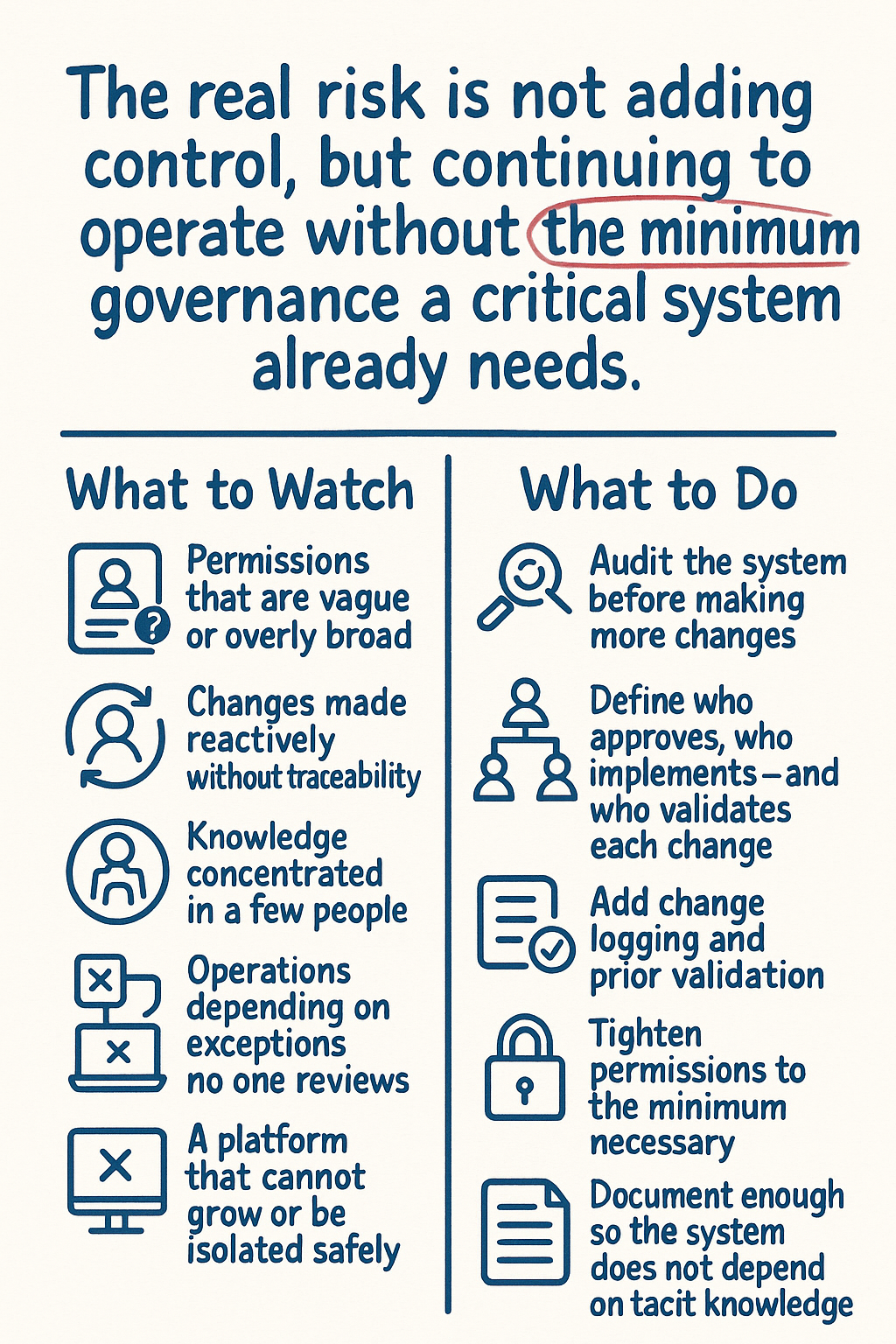
For a CTO, the lesson is quite direct: capacity is not an administrative datum, it is a governance variable. If you do not measure it, management is deciding based on a fiction. And when that happens, the risk is not assumed by the one who makes the promise. It is assumed by the one who delivers.